Call wall and put wall
What the call wall and put wall are, why traders read them as resistance and support, how near walls differ, and why walls move and break.
The 30-second read
The call wall is the strike with the largest positive dealer gamma, and the put wall the strike with the most negative. Hedging is heaviest there, so traders often read them as resistance and support. They're places where positioning gathers, not lines price must respect, and they move.
How a wall is chosen
At each strike, add up the dealer gamma exposure of every call and put in the expiration set: that's the strike's net GEX. The call wall is the strike with the largest positive net, the put wall the one with the most negative.
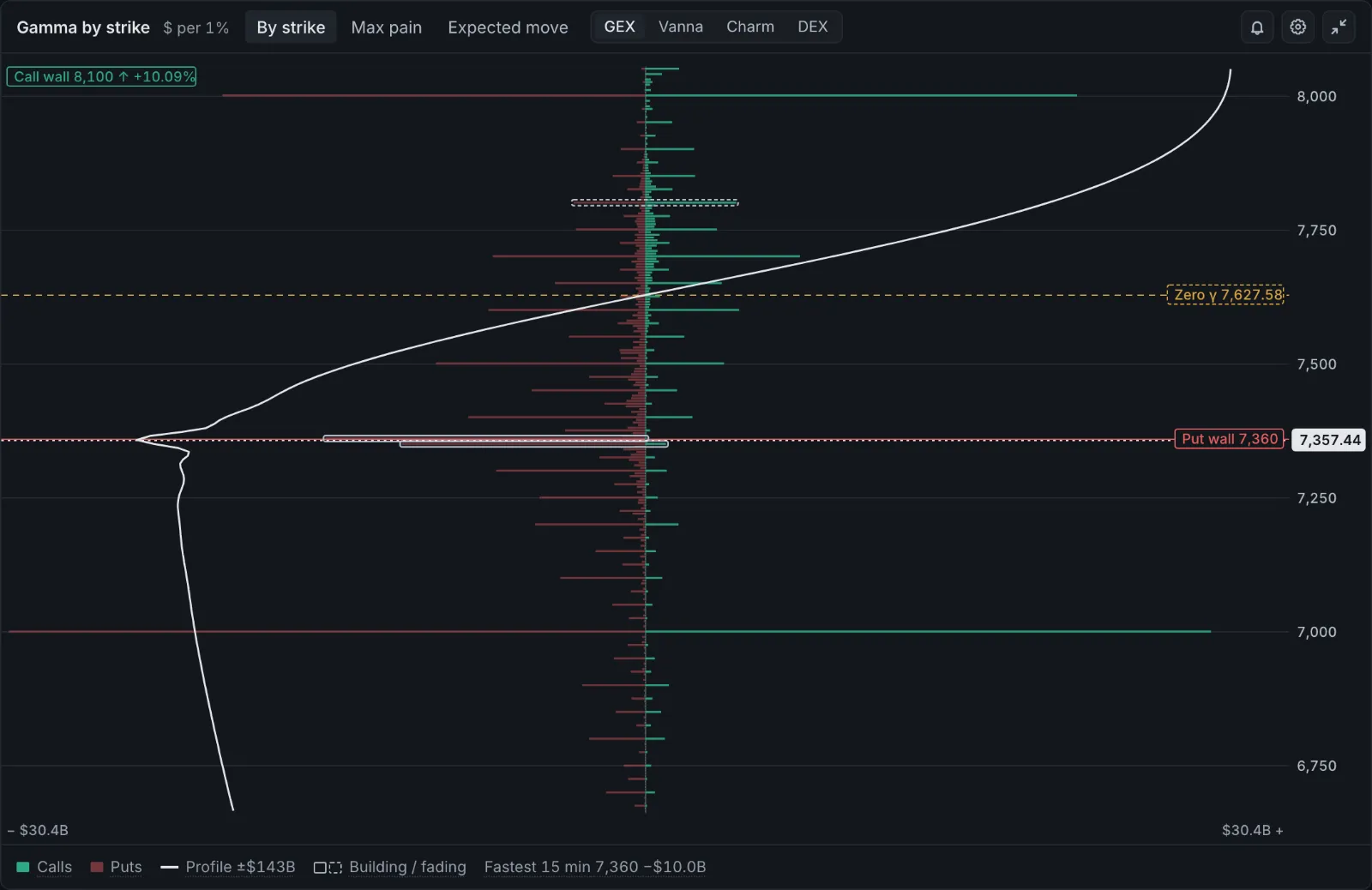
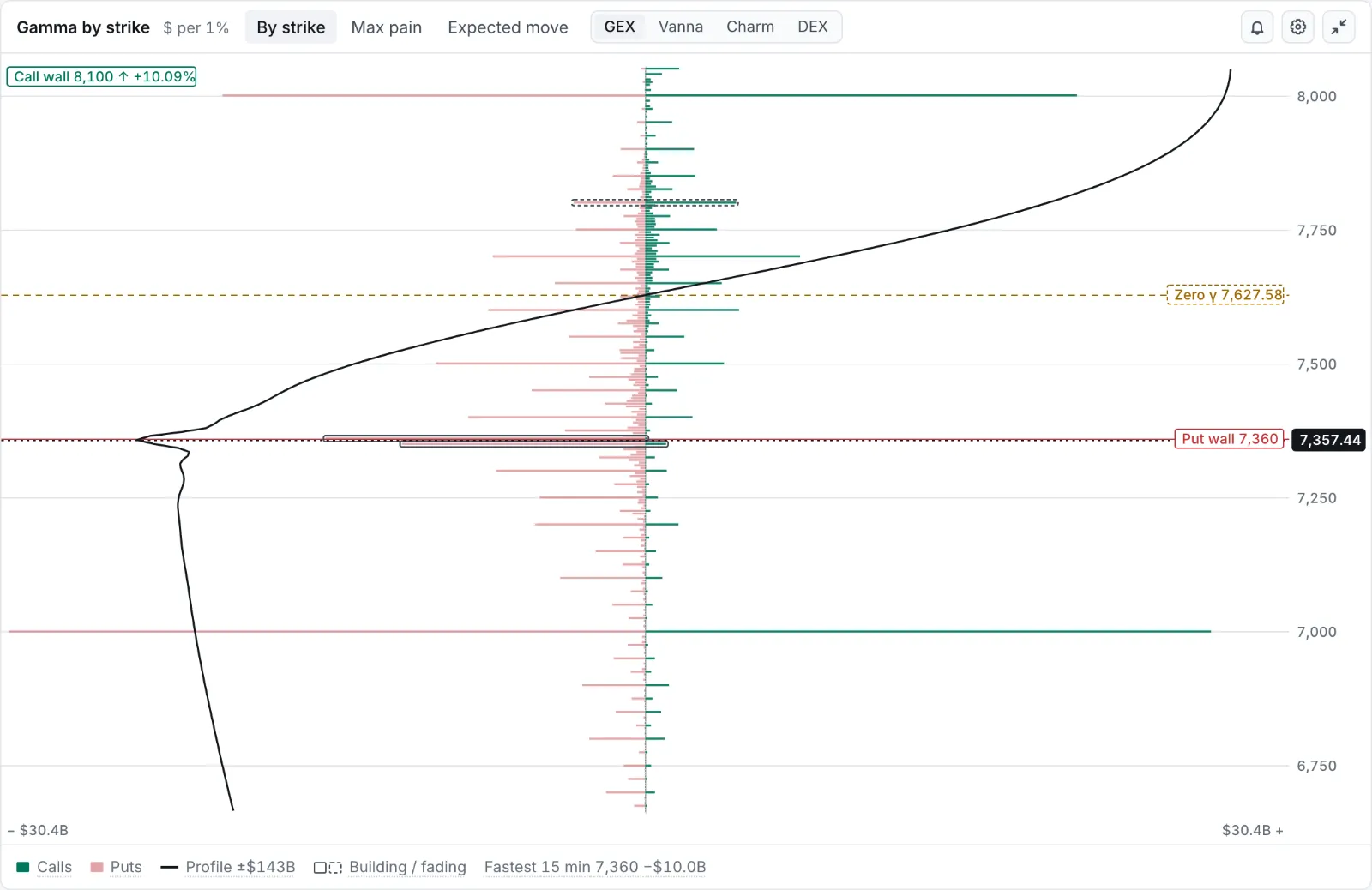
Net matters. A strike with matched call and put open interest, such as a box spread, cancels out and doesn't make a wall, however large its open interest.
Near walls
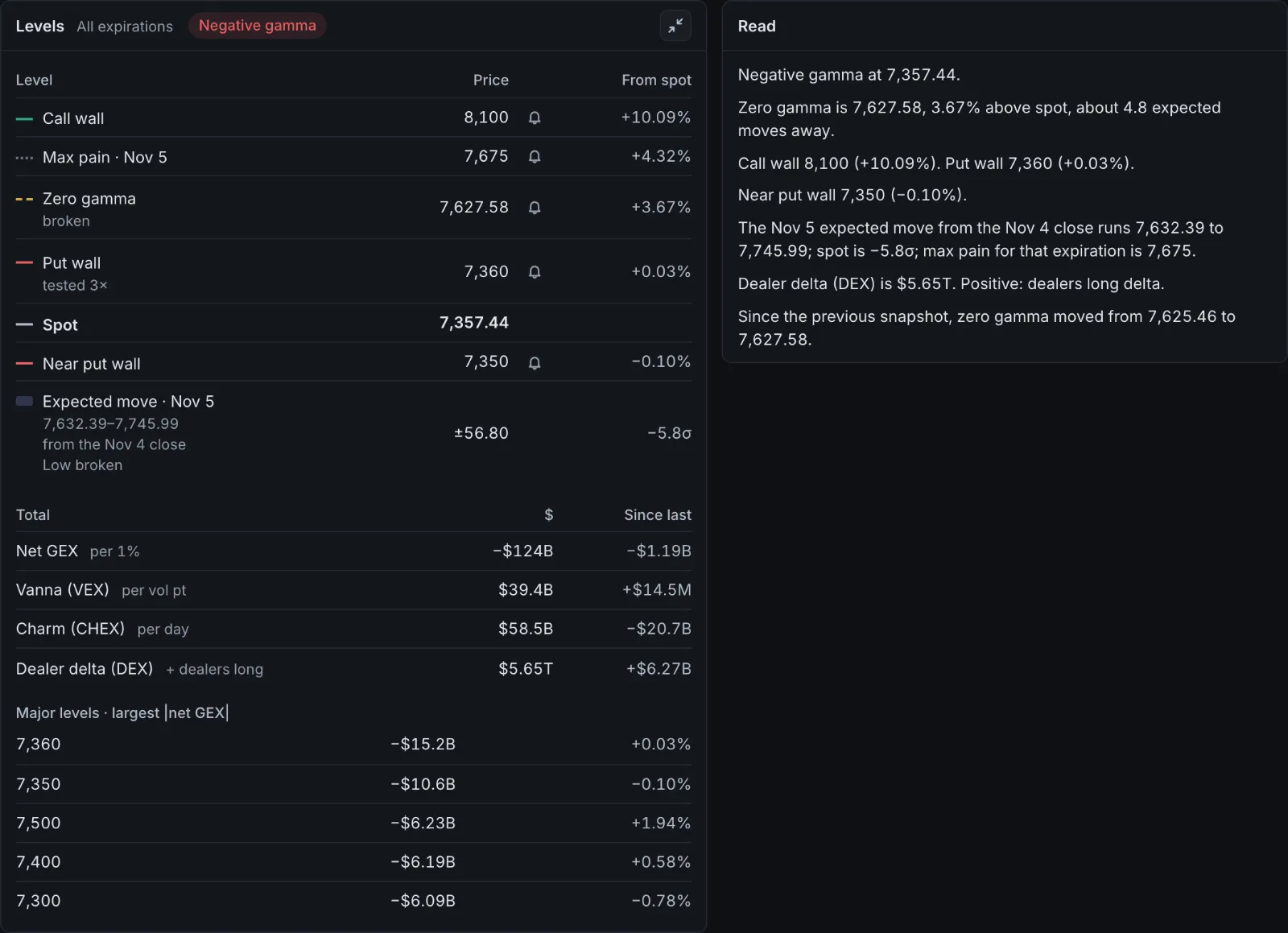
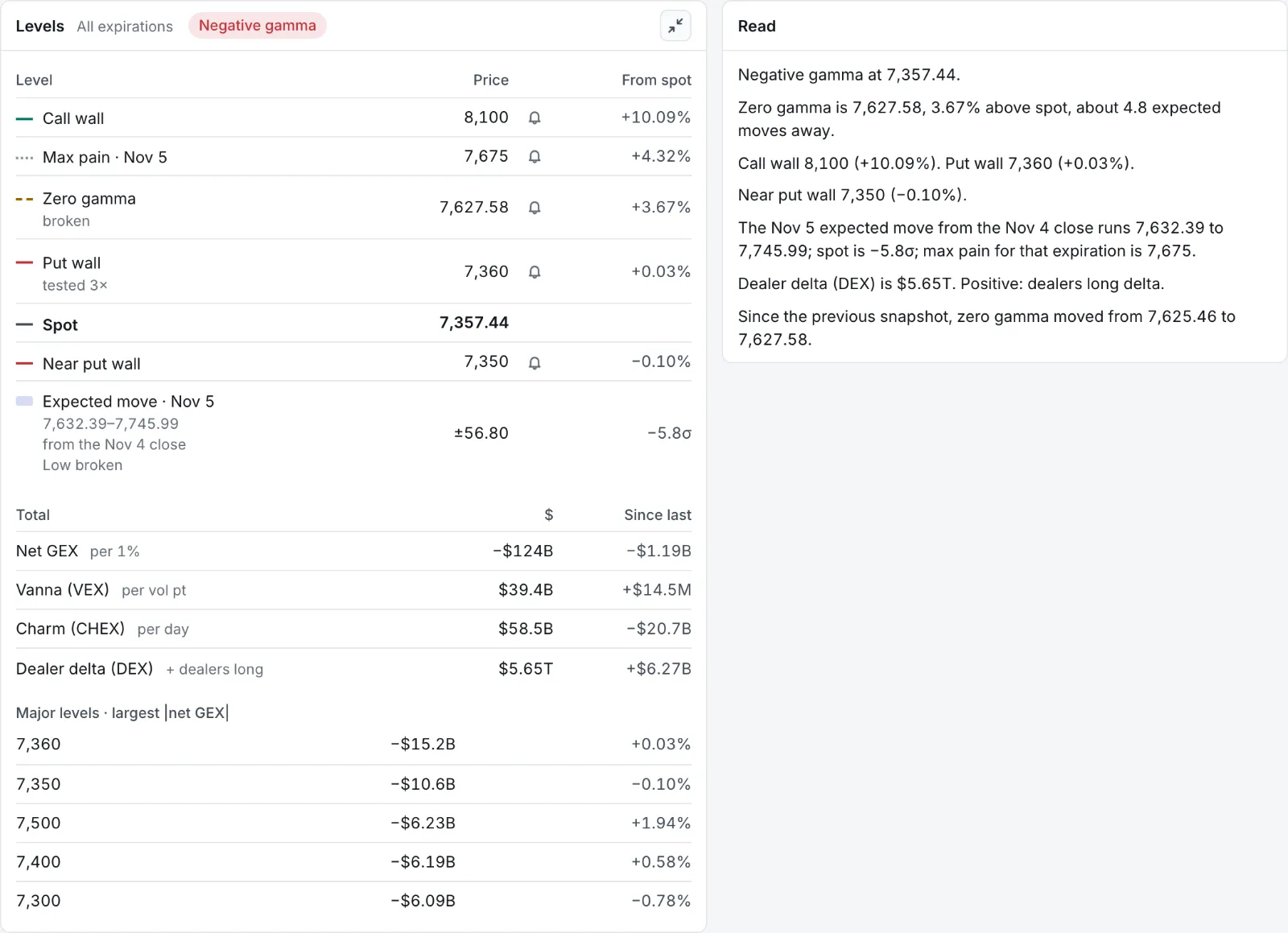
The walls are the largest anywhere, so after a big day one can sit far away or on the wrong side of price. The near walls are the largest walls within two expected moves of price, each at least a quarter of its wall's size. They follow price, so the strike that matters today stays in view.


A day in numbers
On Thu Nov 5, 2026, SPX opened with the put wall at 7,500 and the near put wall at 7,600. Price was through 7,600 by 9:53 and reached 7,500 at 10:25. The put wall didn't hold, and it didn't stay put either: by 12:56 it was 7,400, and at 15:59 7,360 (−$15.2B), with spot 7,357.44 right on it and the near put wall, 7,350, just under. The call wall stayed at 8,100 all day, more than 10% above by the close, which is why it showed as a tag at the strip's end rather than a card.
Why traders read them as support and resistance
If dealers are short a lot of gamma at a strike below price, a fall toward it makes their hedging sell more, and many traders watch for that pressure to exhaust there. A call wall above price works the other way: dealers long gamma there sell into rallies. Both effects are strongest close to expiration, when gamma at the money is largest.
What to do with them
- Check a short strike against them. A put sold below the put wall has the wall between it and price; the strike selector counts that in its score.
- Watch the wall move. A put wall stepping down with price, as on Nov 5, says positioning is following the fall, not stopping it.
- Compare sets. A wall that holds in All, Week, and 0DTE is backed by more of the chain.
Where the model breaks
- A wall is an estimate under one convention. Dealers are assumed long calls and short puts. A single stock's put wall is the least certain level: investors there often sell puts, which would leave dealers long them.
- Walls break. Heavy hedging can slow a move; it doesn't promise to stop one, and once through a negative-gamma wall, hedging can speed the move up.
- Walls move between snapshots as price, time, and implied volatility change, and overnight as open interest updates.
- Open interest is yesterday's, so today's new positions don't build or erase a wall until tomorrow.