Vanna and charm, explained
The two hedging flows besides gamma: vanna, from changes in implied volatility, and charm, from time passing. How they're signed, where they matter, and their limits.
The 30-second read
Gamma says how dealers' hedges change when price moves. Vanna says how they change when implied volatility moves, and charm when time passes. Both can force hedging with price standing still, which is why they're used to explain moves after volatility events and drifts into expiration.
Vanna
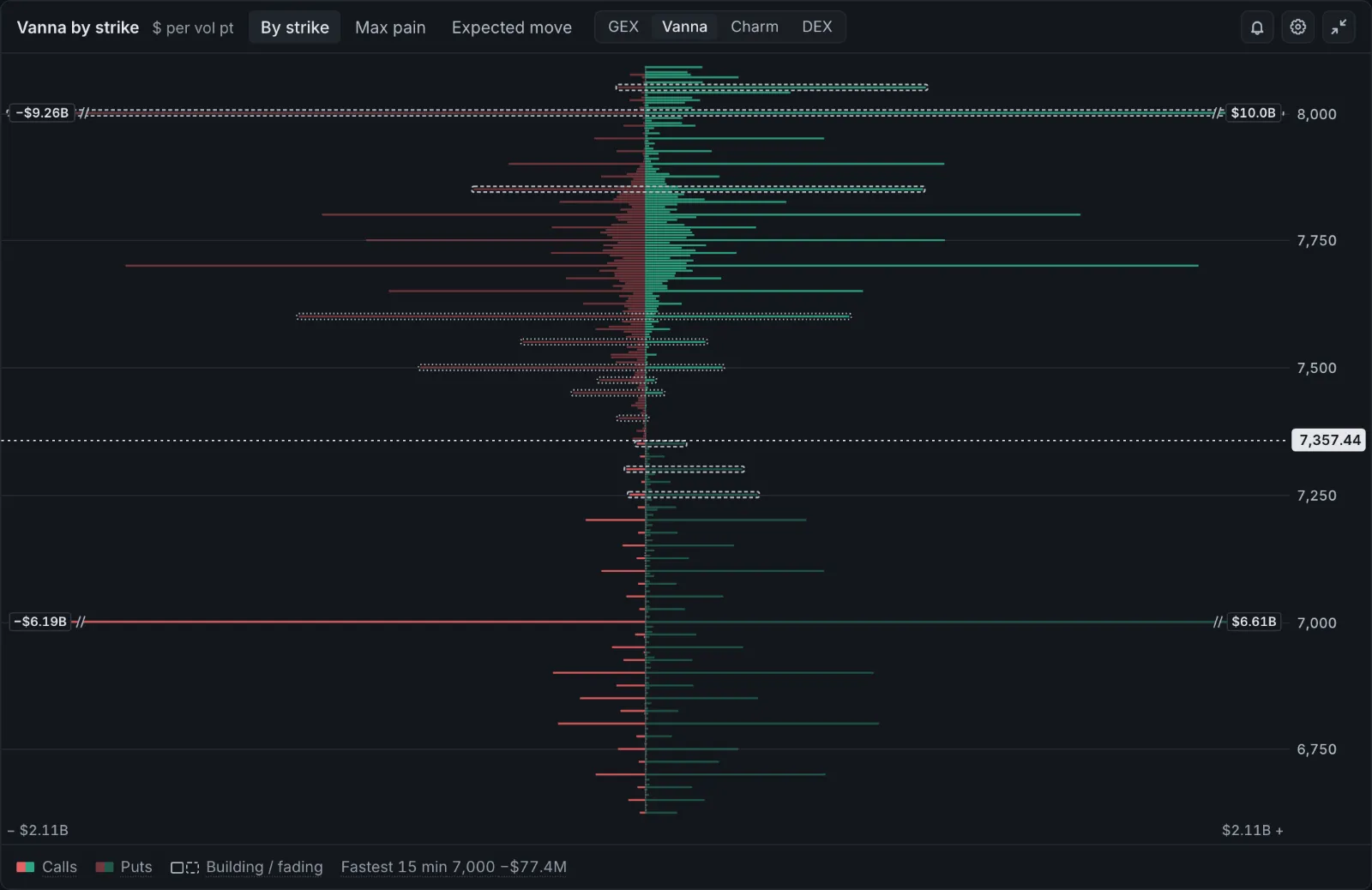
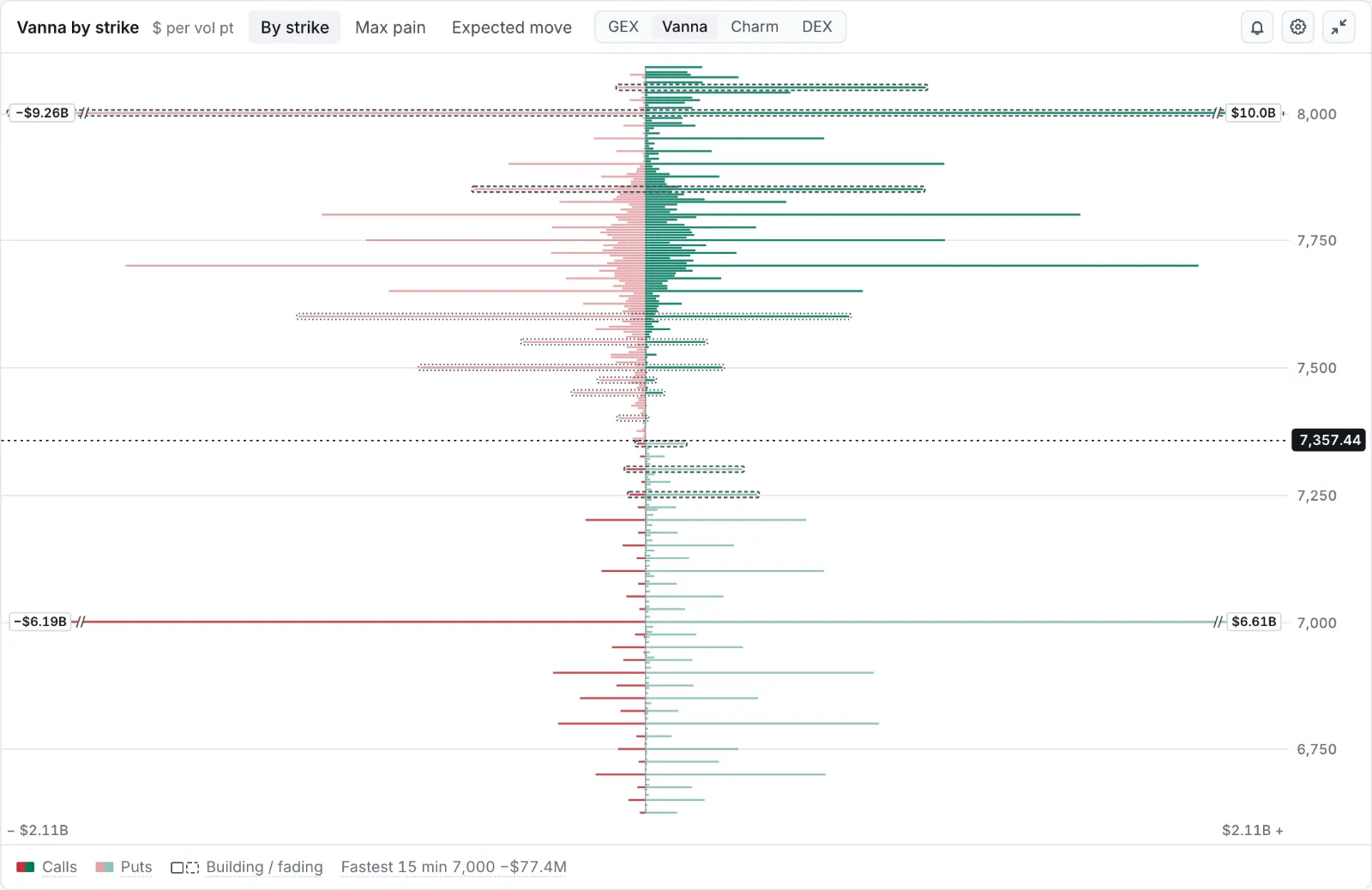
Vanna is how much an option's delta changes for a one-point rise in implied volatility. Out-of-the-money options gain delta as volatility rises (they become more likely to finish in the money) and lose it as volatility falls. Vanna exposure (VEX) adds it up from the dealer's side, weighted by open interest and the price, in dollars of dealer delta per volatility point. Positive VEX: a rise in IV makes dealers sell, a fall makes them buy. Negative VEX the reverse. A common story: after a scary event passes, implied volatility falls, and with positive VEX dealers buy back hedges, supporting price.
Charm
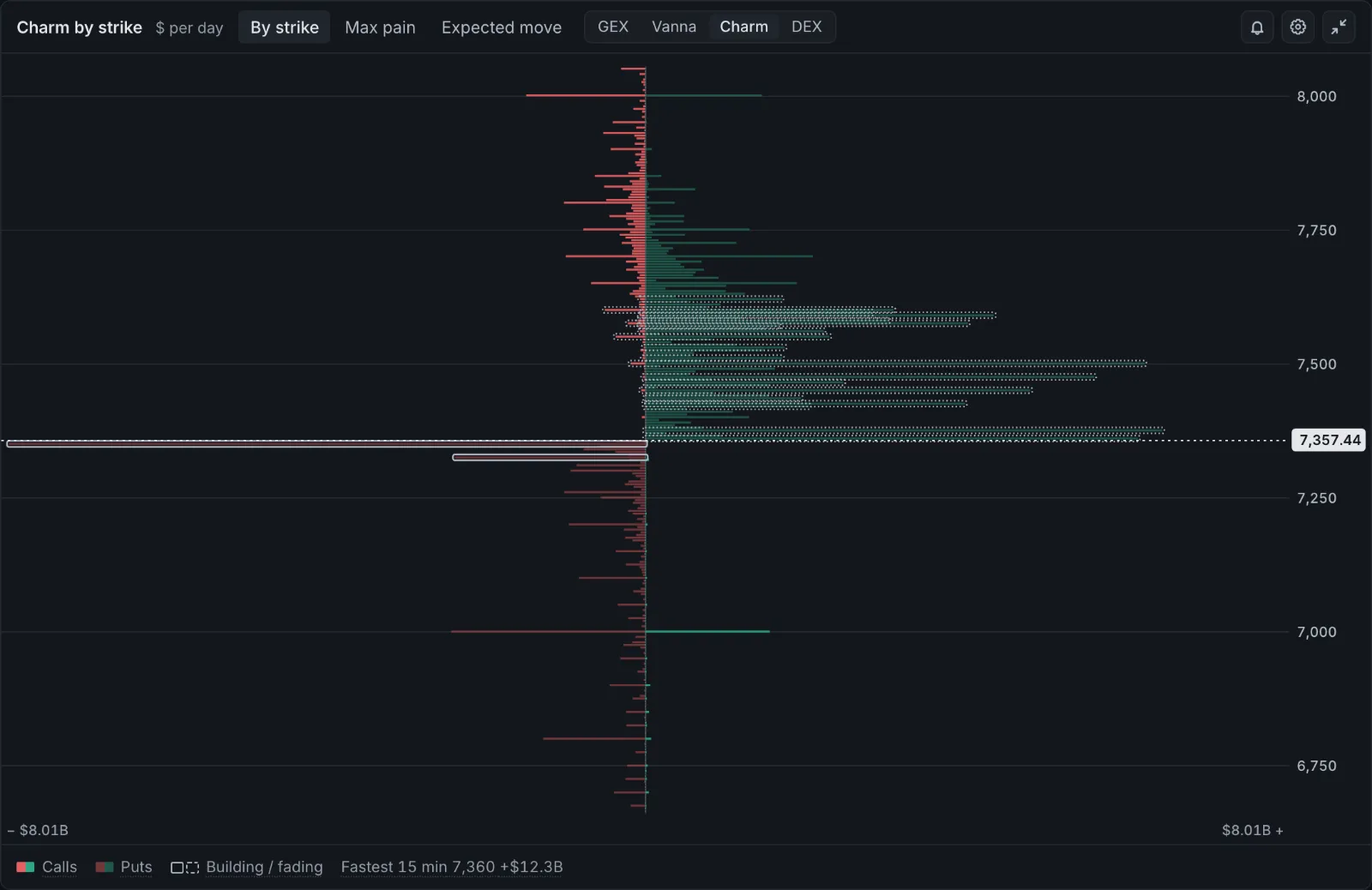
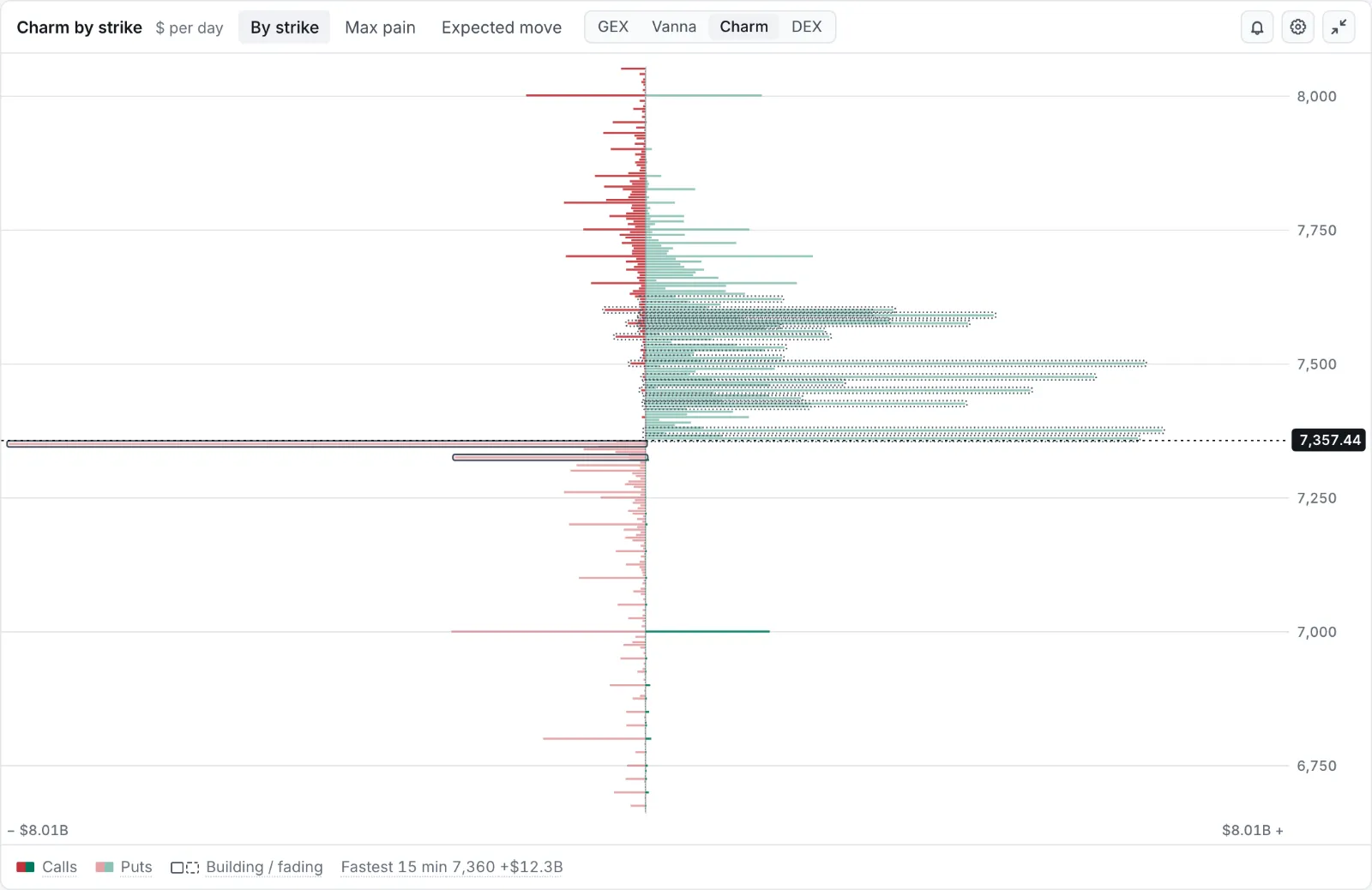
Charm is how much delta changes as one day passes, everything else equal. An out-of-the-money option's delta drifts toward zero as expiration nears. Charm exposure (CHEX) adds it up the same way, in dollars of dealer delta per calendar day. Positive CHEX: time passing makes dealers sell; negative, buy. Charm grows fast in the last days before an expiration, most of all for 0DTE.
A day in numbers
At 15:59 on Thu Nov 5, 2026, with SPX at 7,357.44, exposure by strike told three different stories. Gamma's largest strikes sat at spot (7,360 at −$15.2B, 7,350 at −$10.6B). Vanna's sat far above, at 8,050 (+$842M) and 8,000 (+$776M), out-of-the-money calls. Charm's largest was 7,350 (−$8.01B per day), next to price, where time decay changes delta fastest. Totals: VEX +$39.4B per point, CHEX +$58.5B per day.
Reading them
- Vanna around volatility events: before and after a report, CPI, or an FOMC decision, when implied volatility is likely to move a lot.
- Charm into expiration: the last days before a large monthly, and every afternoon for same-day options.
- Switch greeks on exposure by strike and the heatmaps to see where each sits.
Where the model breaks
- Both use the same sign convention as gamma (dealers long calls and short puts), with the same weaknesses: worst for single stocks and same-day options.
- They assume nothing else changes. In practice price, volatility, and time move together; a fall usually lifts volatility, so gamma and vanna act at once.
- The flows are estimates of pressure, not trades. Dealers don't have to hedge on a schedule, and many hedge with other options.
- The units differ. Vanna is per volatility point, charm per day, gamma per 1% move, so the three totals don't compare directly.