What is GEX? Gamma exposure and dealer positioning, explained
What gamma exposure measures, why dealer hedging can damp or stretch a move, how to read positive and negative gamma, and what the number can't tell you.
The 30-second read
GEX (gamma exposure) estimates how much stock or futures options dealers would have to buy or sell to stay hedged if the price moved 1%. Positive GEX means their hedging leans against moves; negative GEX means it leans with them. It's a read of positioning, built on an assumption about who holds what, not a forecast of direction.
Why dealers hedge
A market maker who sells you a call doesn't want to bet on the stock. So it buys some stock against the call, enough to offset the call's delta, and adjusts that hedge as the price moves. How much the hedge has to change for each move is the option's gamma.
Add up gamma across every open contract, weighted by open interest and signed for the dealer's side, and you get an estimate of the hedging the whole chain would force. That total is gamma exposure.
Positive and negative gamma
The sign of the total is the regime:
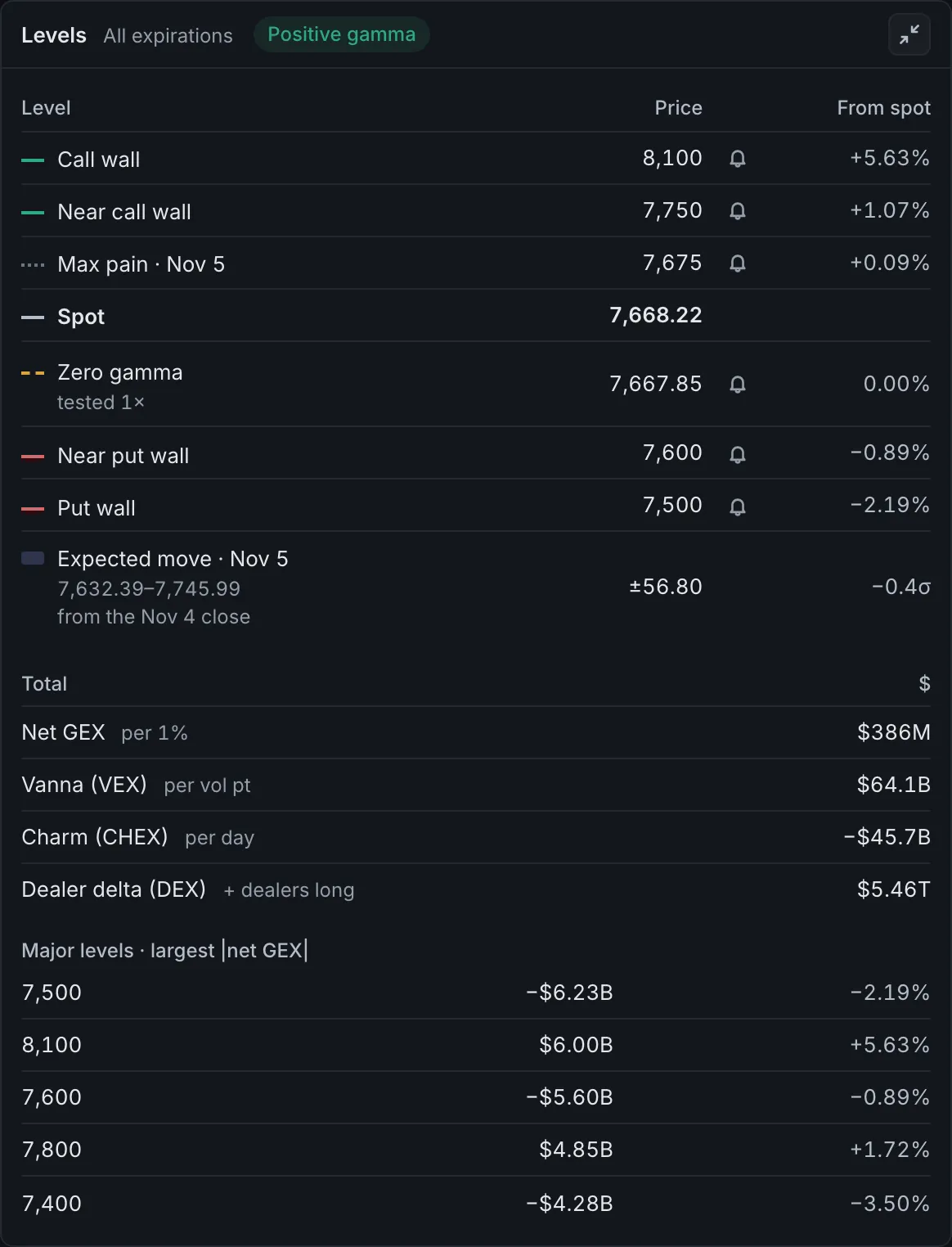
- Positive gamma. As the price rises, dealers' delta rises, so they sell to stay flat; as it falls, they buy. Their hedging leans against the move, which tends to damp it.
- Negative gamma. As the price rises, dealers have to buy; as it falls, they have to sell. Their hedging leans with the move, which can stretch it.
Neither says which way the market goes. A positive-gamma market can fall; it just tends to fall in smaller steps.
A day in numbers
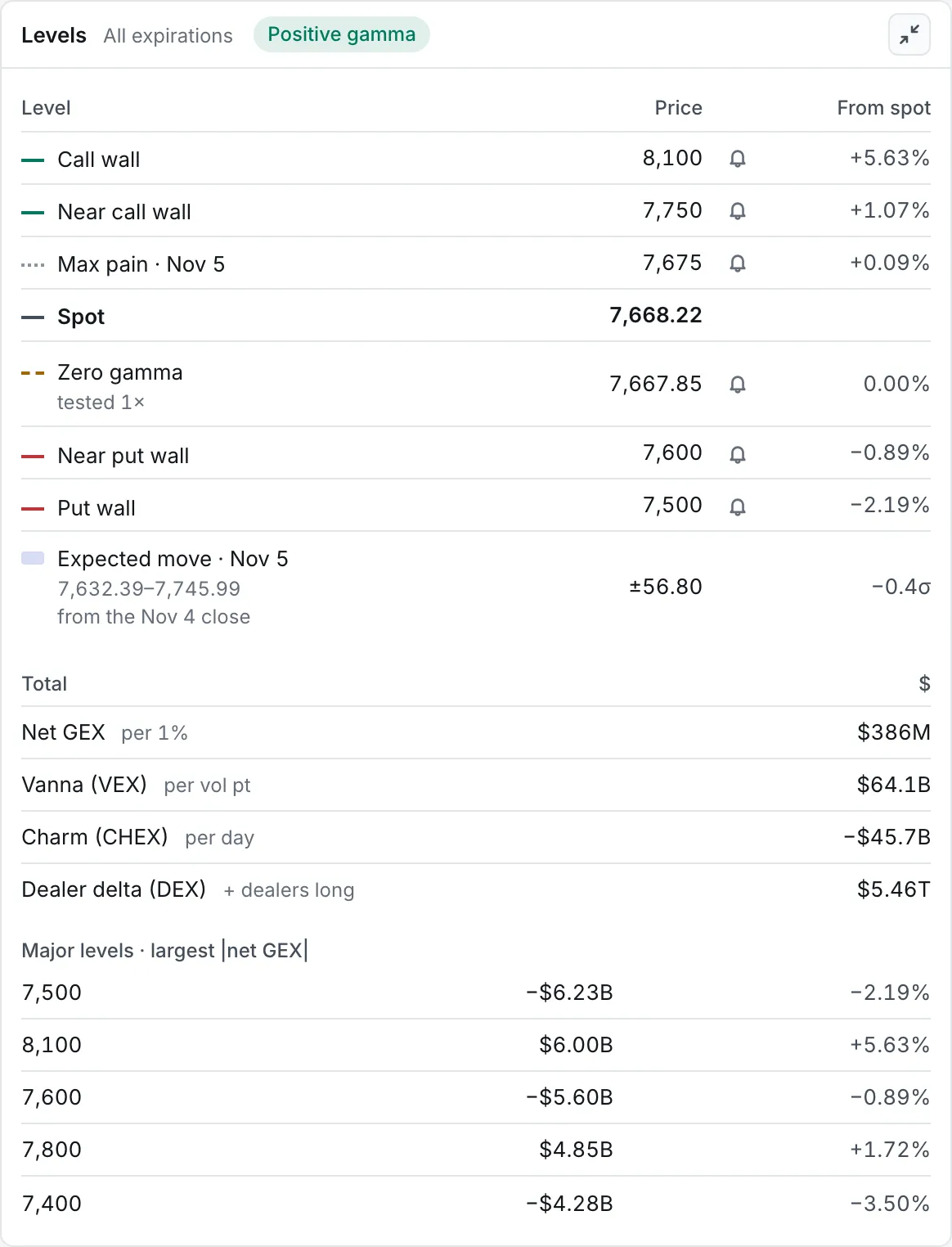
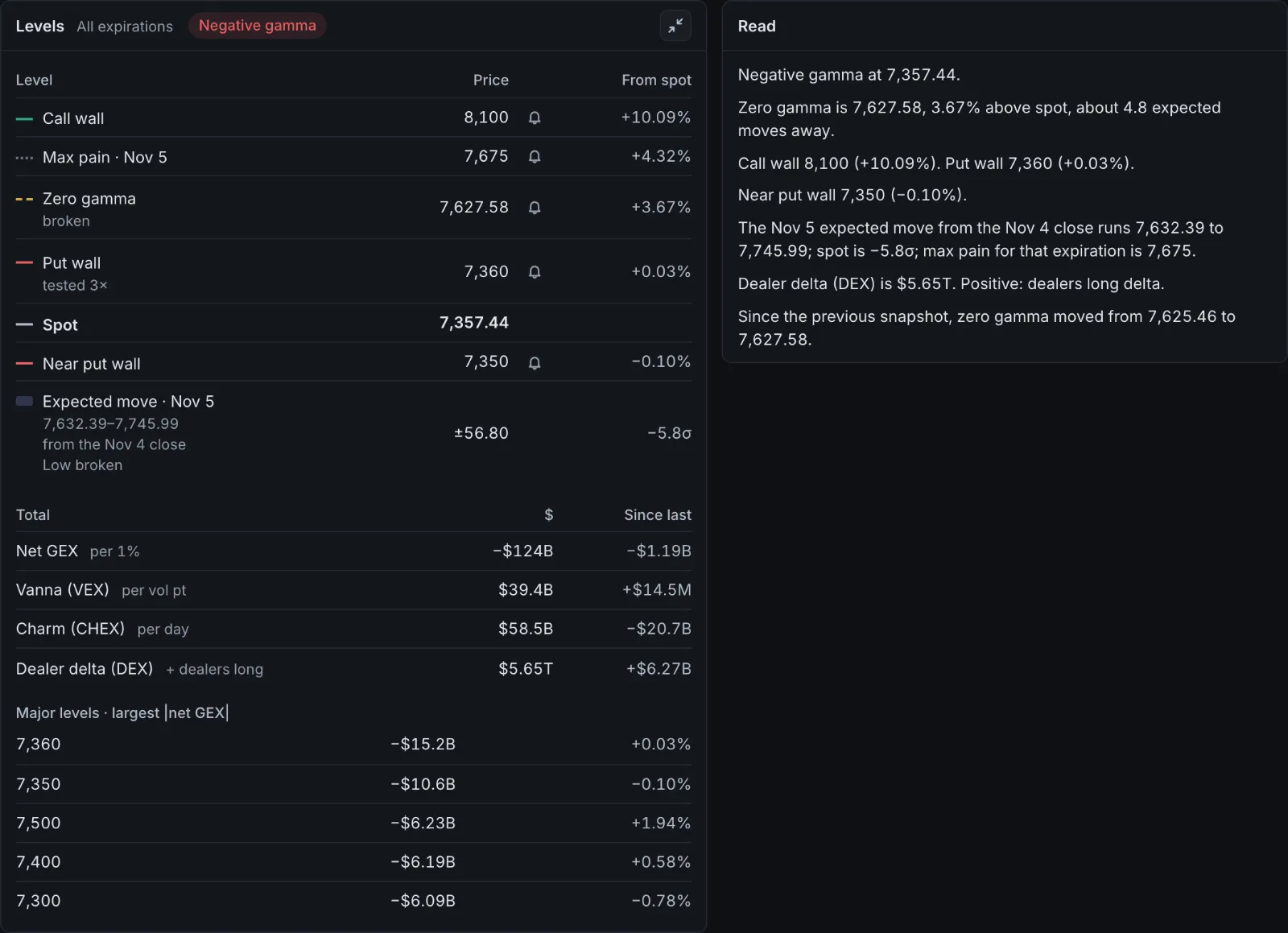
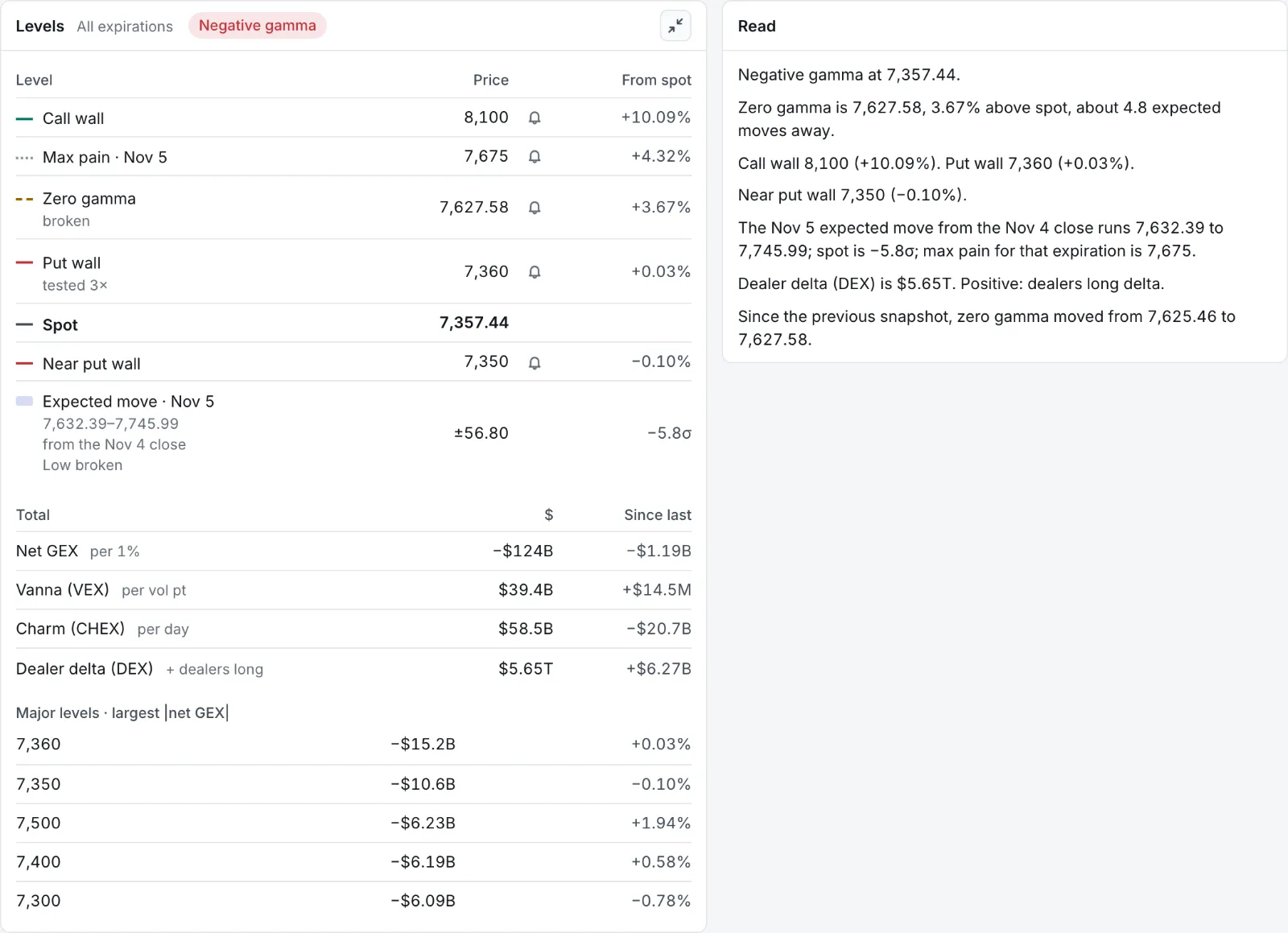
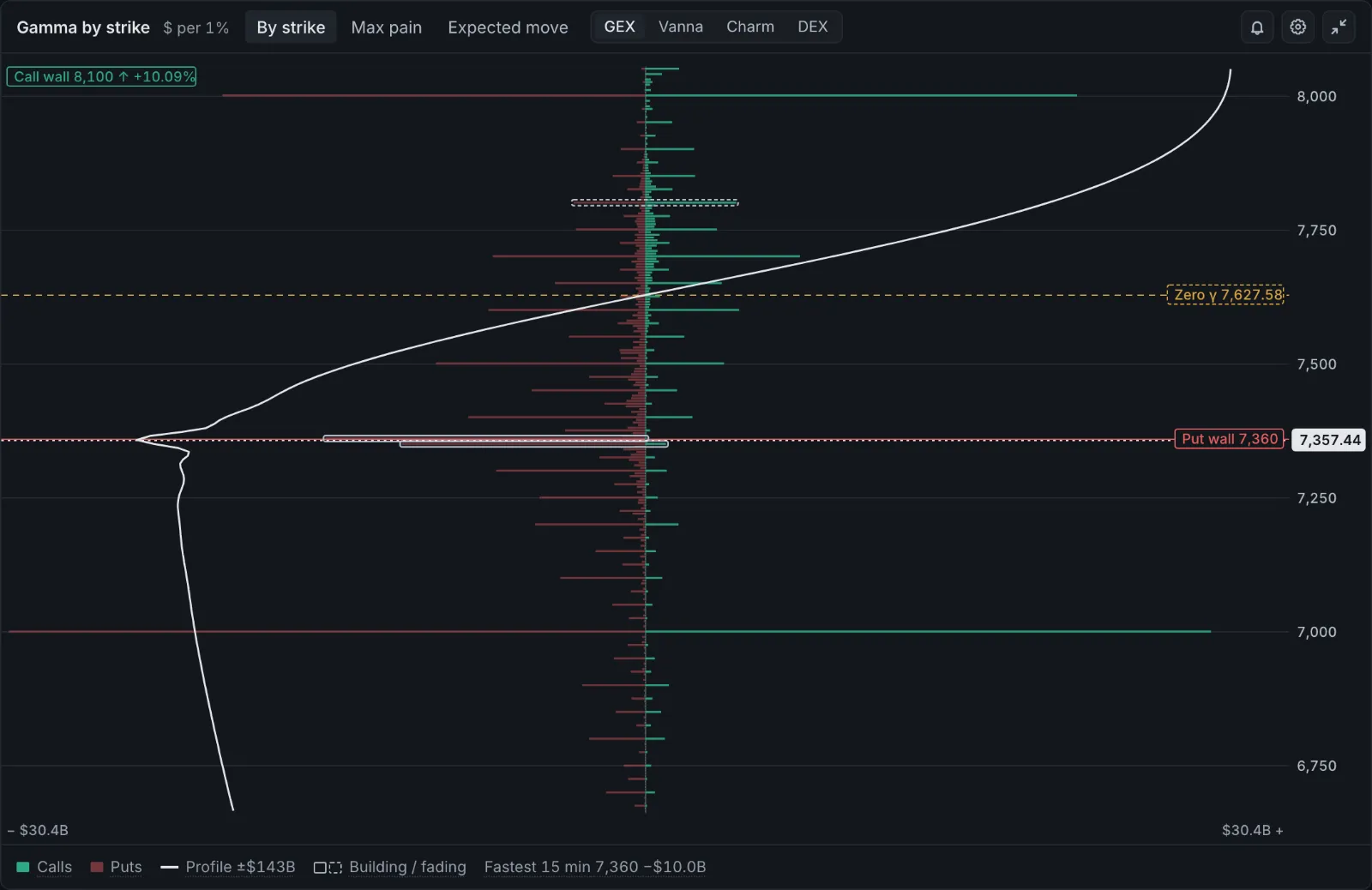
On Thu Nov 5, 2026, SPX opened at 7,678.72 with total GEX barely positive (+$386M at the 9:31 snapshot) and zero gamma, where the total changes sign, at 7,667.85, right at spot. Price was under it within minutes. At 15:59 SPX was 7,357.44, down 4.31%, and total GEX was −$124B: a 1% rally would have left dealers needing to buy about that much, and a 1% fall to sell it. Each leg lower had made the regime more negative, so each leg met more selling from hedging, not less. The Levels guide walks the same day level by level.
How GEX is computed
Each contract's gamma comes from its implied volatility and its time to expiration. It's scaled by the contracts open and by the price, so the result is in dollars of dealer delta per 1% move, and counted as dealers long the calls and short the puts. Summed over a set of expirations it gives total GEX; summed at each strike it gives exposure by strike, whose largest positive and most negative strikes are the call wall and put wall.
What to do with it
- Read the regime before the day. In negative gamma, size for wider ranges.
- Find price against zero gamma. Near it, the regime can flip on a small move.
- Use the walls as places to watch, not as lines that must hold.
Where the model breaks
- Who holds what is assumed. Open interest doesn't say who owns a contract. The standard convention, used here, takes dealers as long calls and short puts. It fits index options best and single stocks worst, where investors often sell puts and dealers may be long them.
- Open interest is yesterday's. Positions opened today, including heavy same-day trading, show up tomorrow.
- Dealers don't all hedge the same way. Some hedge partly, some with futures or other options.
- Different tools give different numbers for the same ticker, because they make different assumptions about sign, expirations, and units. Compare levels within one tool.